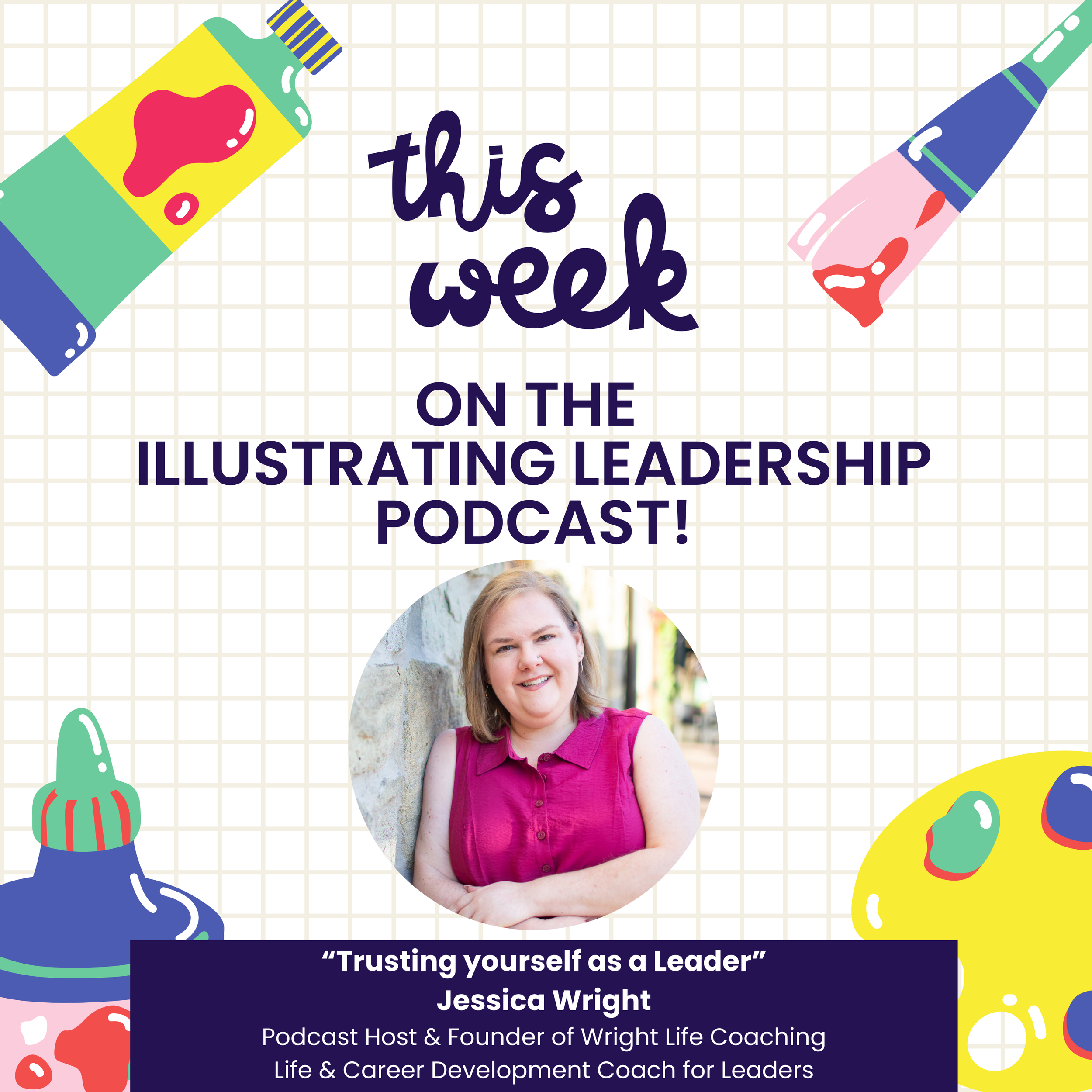
Illustrating Leadership Lesson: Trusting Yourself as a Leader
We often assume our loudest internal thoughts...the ones that criticize, doubt, catastrophize, or convince us to shrink...are our intuition. But they’re not.
Those voices are saboteurs: fear-based inner critics trying to keep you safe by keeping you small. They say things like:
“You’re not experienced enough.”
“What if people don’t like how you handled that?”
“You’re probably overreacting.”
If you let saboteurs run the show, you end up making decisions rooted in fear, not wisdom. You’ll second-guess yourself, chase external validation, or avoid the very actions leadership requires.
The first step isn’t fighting your saboteur. It’s noticing it. Ask yourself:
Is this fear or wisdom?
What story is this voice telling me?
Do I actually believe it?
Redirecting your saboteur is where self-trust begins.
Listening to Your Intuition
Unlike saboteurs, your intuition is quiet. Steady. Calm. It may show up as a gut feeling, a physical sensation, or a grounded inner knowing. It often tells you truth before logic can catch up.
Your intuition might say:
“This is right, even if it’s hard.”
“This isn’t right, even if it looks good on paper.”
To access it, ask:
What decision would I make if I wasn’t afraid?
What feels true in my body?
What do I know deep down, even if I can’t explain it yet?
You don’t have to be “woo-woo” to listen to your intuition. It’s simply nervous system intelligence speaking quietly beneath the noise. Self-trust grows when you create space to hear it.
Letting Go of People-Pleasing
Many leaders, especially empathetic ones, fall into the trap of people-pleasing. Wanting harmony, wanting to be liked, wanting to support others…these are strengths.
But when the desire to please overrides what the team needs, or what you know is right, it becomes a problem.
People-pleasing leads to:
Saying yes when you mean no
Avoiding necessary feedback
Overcommitting to prove your worth
Prioritizing approval over alignment
People-pleasing erodes self-trust because deep down, you know you’re not leading from your values. You’re leading from a fear of disappointing others.
Letting go of people-pleasing isn’t harshness. It’s honesty. You can be kind and direct, empathetic and boundaried, caring and clear. Leadership isn’t about making everyone happy. It’s about leading well.
How to Build Real Self-Trust
Self-trust is built slowly and intentionally through repeated aligned action. Here are three practices I share in the episode:
1. Keep small promises to yourself.
Start with simple things, like ending a meeting on time or taking a breath before your next task. Each follow-through reinforces the message:
“I can trust myself.”
2. Say the hard thing kindly.
As you practice honest, compassionate communication, you’ll see you can handle tough moments. And that others respond better when you lead with clarity.
3. Take aligned action even when you’re nervous.
Confidence isn’t built by waiting to feel fearless. It’s built by moving forward while unsure. Let your values drive your decisions, not your fear.
The more you redirect your saboteurs, honor your intuition, and release the need for external approval, the more you’ll lead from grounded, authentic confidence.
Your Voice Is Wise. Trust It
Self-trust is a leadership skill that grows decision by decision. And the more you choose alignment over approval, wisdom over fear, and courage over comfort, the more powerful and grounded your leadership becomes.
You already carry the wisdom you need — now is the time to trust it.
LEARN MORE ABOUT YOUR PERSONAL SABOTEURS WITH THIS QUICK ASSESSMENT. And connect with your host, Jessica Wright, on LinkedIn.
